



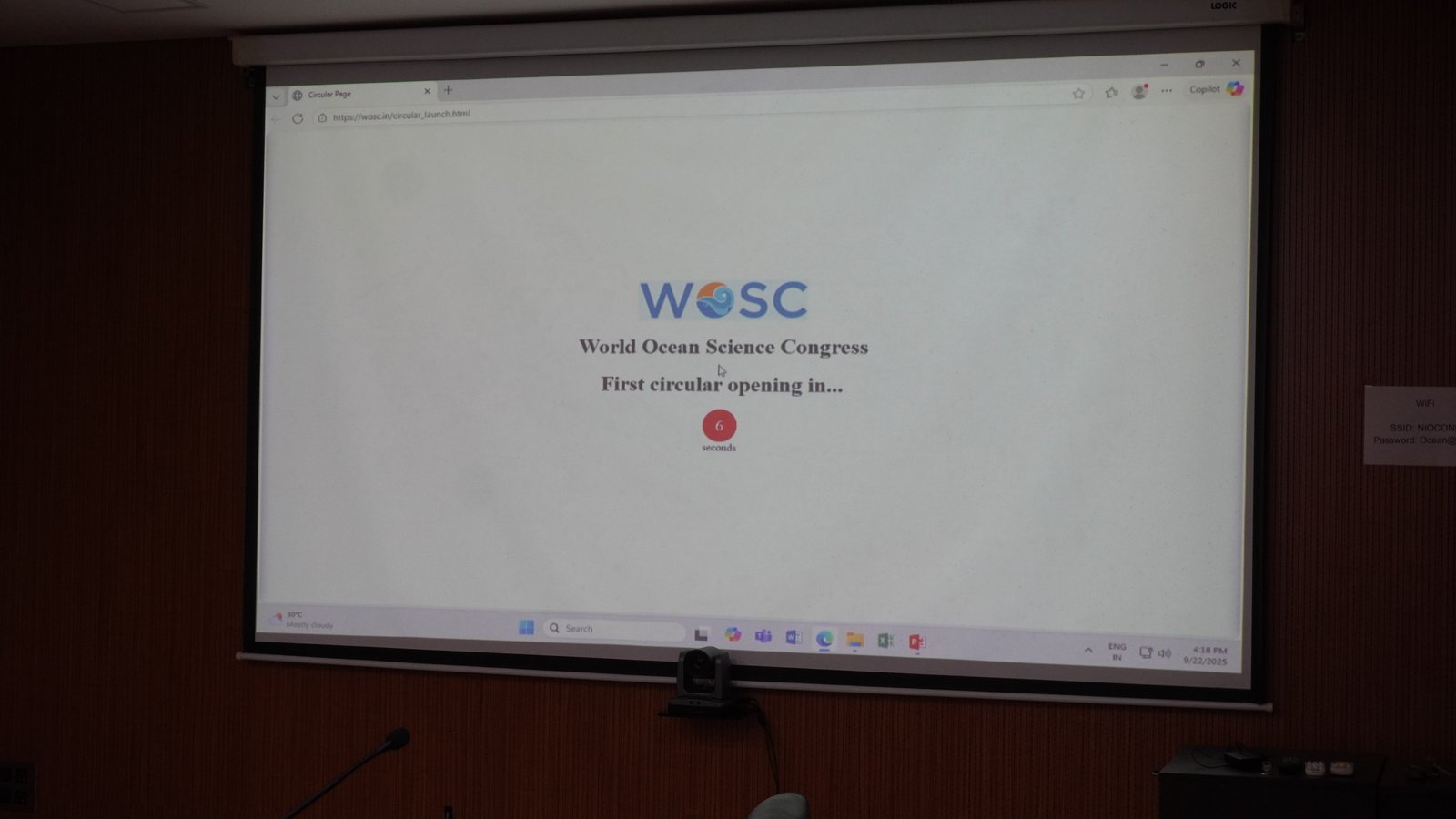
The ocean is the lifeblood of our planet—regulating climate, producing oxygen, and sustaining biodiversity and livelihoods. WOSC‑2026 convenes ~1000 delegates—students, experts, advocates, and decision‑makers—to inspire action and craft solutions for a healthier, more resilient ocean.
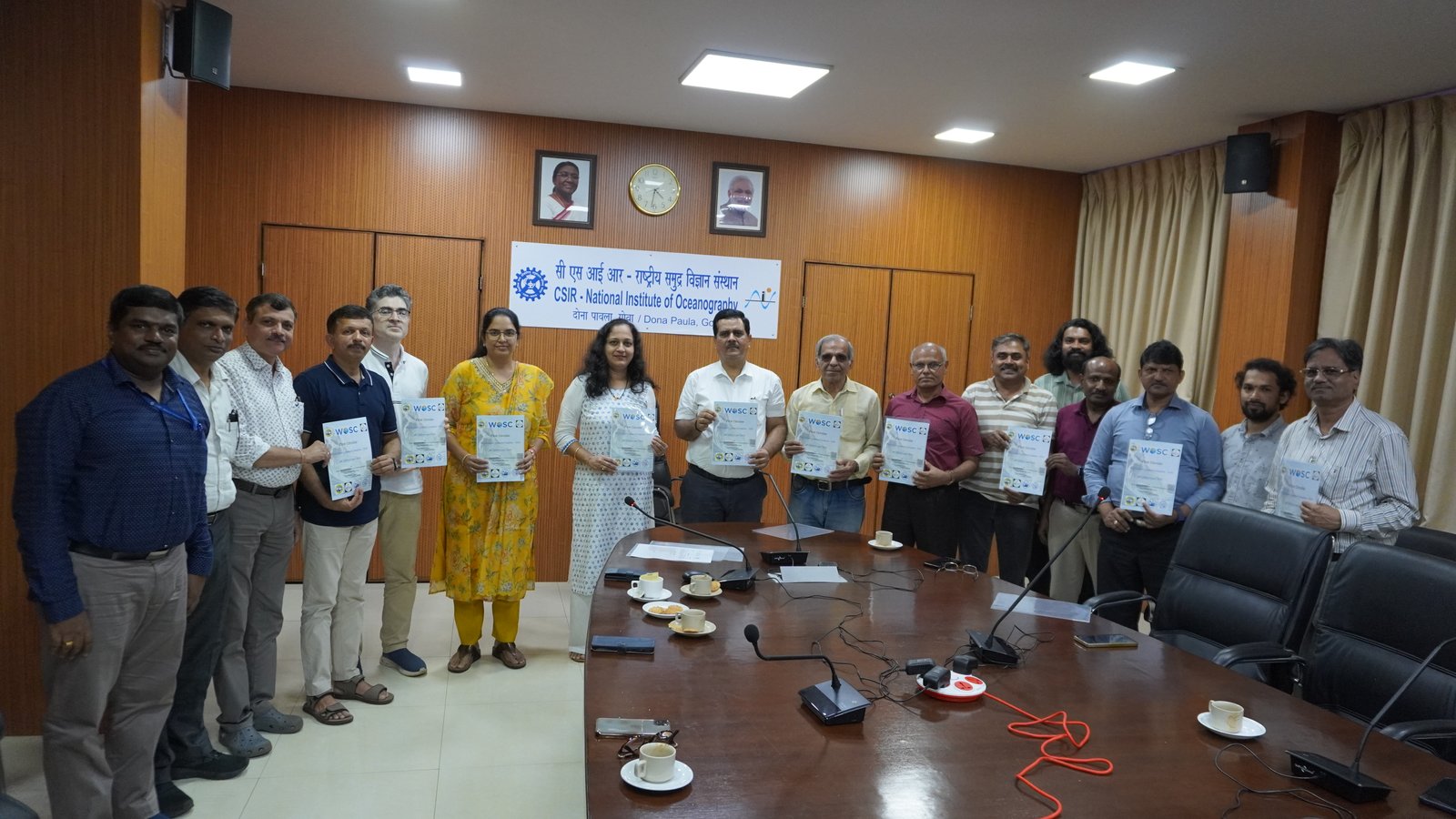
Proposals are invited from colleagues, institutions, universities, societies, industries and other stakeholders. Session proposals are not limited to the themes below.
Proposer: Alex Kirubakaran A
Co-Proposer:NA
Email: akalex053@gmail.com
Description: This session will focus on the integration of ocean optics, biogeochemistry, and remote sensing for understanding coastal and offshore water dynamics. It aims to bring together researchers working on chlorophyll-a, total suspended matter (TSM), and other optically active constituents, highlighting the synergy between satellite observations and in-situ measurements. The session will cover emerging techniques such as size-fractionated phytoplankton analysis, nutrient-plankton interactions, and validation of regional and global ocean colour algorithms. Participants will discuss novel methodologies, regional applications, and interdisciplinary approaches to advance ocean monitoring and management. The session intends to foster collaboration, encourage the exchange of ideas, and provide a platform for presenting both theoretical and applied research in ocean optics and biogeochemistry.
Proposer: Gowri Nair A S
Co-Proposer:Dr. P K Saji, Dr. Roshin P Raj
Email: gowriajithasreekumar@gmail.com
Description: The study aims the analysis of mesoscale eddies using tracked data of eddies over the Arabian sea region around the time period 2023-2024, using SWOT and CMEMS products
Proposer: Dr. Samir R Damare
Co-Proposer:NA
Email: samirdamare@gmail.com
Description: Omics technologies—encompassing genomics, transcriptomics, proteomics, and metabolomics—are revolutionizing our understanding of ocean ecosystems. This session invites contributions that explore how omics approaches are being applied to unravel the diversity, functions, and interactions of marine organisms across spatial and temporal scales. We welcome studies that integrate omics with oceanographic, ecological, and biogeochemical data to address key questions in marine science, including ecosystem responses to climate change, nutrient cycling, and the roles of microbes in ocean health. Presentations may highlight novel methodologies, interdisciplinary frameworks, and case studies from coastal to deep-sea environments. This session aims to foster dialogue between molecular biologists, oceanographers, and data scientists to advance the frontiers of ocean omics.
Proposer: Dr. Damodar M. Shenoy
Co-Proposer:Dr. Aneesh Lotliker (INCOIS) & Dr. Sabu P. (NAPOR)
Email: dmshenoy.nio@csir.res.in
Description: The oceans are essentially the lifeblood of our planet. Their vast expanse supports all types of terrestrial and aquatic life, aids in climate regulation, provides essential resources, and influences global weather patterns. Understanding their crucial role is vital for ensuring a sustainable future. Consequently, monitoring the oceans is an important task, especially the Indian Ocean, which is notably distinct from the other two oceanic basins, namely the Pacific and the Atlantic, and is home to nearly 2.7 billion people in the coastal nations. This session aims to present the existing observational infrastructure in the Indian Ocean, including the Southern Ocean. The observational platforms comprise ground observations from ships and boats, remote observations using autonomous vehicles such as Argo/Bioargo floats, gliders, moorings, and satellites. The session will concentrate on proposing an observational requirement/framework for the Indian Ocean to benefit the Indian Ocean Rim countries, with an emphasis on climate change
Proposer: Akshay Kumar Sagar
Co-Proposer:NA
Email: akshaysagar57@gmail.com
Description: To know about the latest AI/ML techniques related to the extreme events and other phenomenon occurring in the environment, ocean etc.
Proposer: Dr. Rajdeep Roy
Co-Proposer:1) Aneesh Lotliker, Scientist F, INCOIS, Hyderabad. 2) Kunal Chackroborty, Scientist F, INCOIS, Hyderabad
Email: rajdeep_roy@nrsc.gov.in
Description: Ocean plays a vital role in making the planet habitable by producing roughly 50 % of world oxygen and taking up roughly equal amount to anthropogenic carbon dioxide. Hence, it is important to monitor the ocean for recording any changes resulting due to both natural and anthropogenic processes. The vast remoteness of ocean thus makes this task quite challenging for shipboard measurements which provides limited spatial coverage and repetivity. In recent times, these crucial gaps have been reduced because of remote sensing satellites and autonoums platforms in ocean such as gliders and BGC-Argos. Immense data sets have been generated by these tools on various ocean parameters giving ocean observations a futuristic makeover and also giving the data limited ocean models a new life. In this session we will host various scientific works carried out on ocean observations using tools such as remote sensing and autonomous platforms including data integration for ocean models using machine learning approach.
Proposer: Prof. Suneet Dwivedi
Co-Proposer:NA
Email: suneetdwivedi@gmail.com
Description: Advancements in ocean modeling are increasingly reliant on the convergence of physics-based simulations, real-time observational data, and artificial intelligence/machine learning (AI/ML) techniques. This session focuses on hybrid ocean modeling approaches that integrate traditional numerical models with data-driven and machine learning frameworks, alongside advanced data assimilation (DA) strategies. The goal is to explore innovative methodologies that enhance forecasting skill, reduce uncertainty, and improve the interpretability and efficiency of ocean predictions. We invite contributions that demonstrate new techniques, case studies, and interdisciplinary efforts combining ocean physics, machine learning, and data assimilation. We particularly encourage work that addresses real-world challenges such as climate change impacts, marine ecosystem forecasting, operational oceanography, extreme event prediction, and early warning systems.
Proposer: Dr. Soniya Sukumaran
Co-Proposer:Dr. Mandar Nanajkar, CSIR-National Institute of Oceanography
Email: soniya.nio@csir.res.in
Description: "This session aims to bring together researchers working across diverse marine zones to share insights on ecology, diversity, and functional roles of benthic communities and their responses to anthropogenic and climatic pressures across the full spectrum of estuarine and marine environments, from coastal zones and continental shelves to the deep-sea and abyssal plains. Benthic ecosystems span estuaries, coastal waters, continental shelves, and the deep sea. They are fundamental to global biogeochemical cycles, providing essential ecosystem services, and acting as crucial indicators of ocean health. Benthic communities also serve as sensitive indicators of environmental change, reflecting the impacts of natural variability, habitat alteration, pollution and climate-driven stressors. We welcome submissions focusing on: • Biodiversity Patterns: Drivers of benthic species richness and composition (e.g., environmental gradients, substrate type, connectivity) across different marine zones. • Ecosystem Functioning: Quantification of key benthic functions, such as bioturbation, secondary production, nutrient cycling, and carbon sequestration. • Community Dynamics: Investigations into species interactions, trophic ecology, resilience to disturbance, and the impact of physical and chemical stressors (e.g., deoxygenation, warming, deep-sea mining). • Environmental Indicators: Employing benthic assemblages as indicators of environmental health and change • Methodological Advances: New approaches in sampling, monitoring, modeling, and 'omics technologies applied to benthic research. The goal is to promote an integrated understanding of how benthic diversity supports ecosystem functioning across diverse marine depth and geographic zones, informing conservation and sustainable management strategies for the ocean floor. "
Proposer: Dr. Ravindran C.
Co-Proposer:NA
Email: cravindran.nio@csir.res.in
Description: Marine ecosystems such as coral reefs, mangroves, seagrass meadows, and seaweed beds form the foundation of ocean biodiversity, supporting critical ecological processes and global climate regulation. This session will highlight recent advances in understanding the structure, function, and resilience of these ecosystems under natural and anthropogenic pressures. Special emphasis will be placed on the role of microbial communities that underpin ecosystem health, from coral holobionts and mangrove sediment microbiota to biofilms associated with seaweeds. By integrating perspectives from ecology, microbiology, and biotechnology, the session will explore how shifts in microbial assemblages influence ecosystem stability, productivity, and responses to stressors such as pollution, climate change, and emerging diseases. Presentations will also address novel conservation strategies, restoration tools, and the potential of marine microbes in biotechnological applications, providing a platform for interdisciplinary dialogue to advance sustainable management of marine resources.
Proposer: Dr. Narsinh L. Thakur
Co-Proposer:Dr. G. Dharani, NIOT
Email: thakurn.nio@csir.res.in
Description: The session “Marine Bioprospecting & Biomanufacturing: From discovery to application” aims to bring together academic researchers, students, start-ups, and industry representatives to explore the vast potential of marine bioresources. It will feature invited talks by experts from leading institutes and industries, along with oral and poster presentations showcasing recent advances in marine bioprospecting and bioactive compound development. A key highlight of the session will be an interactive discussion with industry stakeholders on opportunities and challenges in marine biomanufacturing, fostering collaboration between research and commercial sectors. Participants will gain insights into translating marine discoveries into sustainable products for pharmaceutical, nutraceutical, and industrial applications. This session provides a platform for knowledge exchange, networking, and fostering partnerships across academia, industry, and entrepreneurship in the marine biotechnology space.
Proposer: Dr. Lokabharathi P A
Co-Proposer:Representative from IGU
Email: lokabharathiponnapakkam@gmail.com
Description: "Objectives (the following area will be discussed in session) 1. Explore ecological roles of chemosynthetic microorganisms in marine environments. 2. Examine the current research trends and methodologies for studying chemosynthetic systems. 3. Discuss the implications of chemosynthesis for biotechnology, astrobiology, and sustainable energy. 4. Revisit and critically discuss the biochemical pathways involved in chemosynthesis. "
Proposer: Dr. Maria Judith Gonsalves
Co-Proposer:Prof. Judith M. Braganca , judith@goa.bits-pilani.ac.in
Email: mjudith.nio@csir.res.in
Description: This session will explore the vast and often unseen world of marine microbes (bacteria, archaea, viruses, and protists), which are the fundamental drivers of ocean health. We will dive into the incredible microbial diversity across global ocean environments, from coastal waters to the deep sea. Key discussions will focus on ecological interactions, including predator-prey dynamics, viral lysis, and mutualistic symbioses (e.g., in coral reefs). Furthermore, the session will highlight how these interactions control global biogeochemical cycles—like carbon and nitrogen—and how they are being impacted by climate change, offering crucial insights for predictive ocean science.
Proposer: Dr. Jyothibabu R
Co-Proposer:Dr. Manikandan B, CSIR-National Institute of Oceanography
Email: rjyothibabu.nio@csir.res.in
Description: The Gulf of Mannar (GoM) and Palk Bay (PB), located between India and Sri Lanka, are partially separated by Pamban (Rameswaram) Island and a group of submerged sandbars known as Ramsethu (Adams Bridge). The GoM has a wide and open connection to the Arabian Sea (AS) in the west, while the PB has a narrow connection to the Bay of Bengal (BoB) in the east via the shallow Palk Strait. The northern GoM is a designated Marine Biosphere Reserve of India and is known for its high biodiversity potential and ecological sensitivity. But the adjacent PB, although a very shallow, semi-enclosed, quiescent area for most of the year and biologically resourceful, lacks peer-reviewed scientific data on its faunal diversity and richness. This is mainly because there hadn't been much scientific research done for almost 3 decades due to the safety risk of the civil (Ezham) war that Sri Lanka faced from 1983 to 2009. The oceanography of the GoM and the PB has advanced significantly over the past ten years. This advancement was primarily the result of the seasonal field sampling conducted by the CSIR-National Institute of Oceanography (CSIR-NIO), India, associated with the feasibility study of the Sethusamudram Ship Channel proposal considered by the Government of India. There are several research and academic institutions that are currently involved in diverse research aspects linked to the GoM and PB. Therefore, a multidisciplinary session on GoM and PB is proposed, anticipating participation from researchers across various disciplines who are engaged in investigating different aspects of these two ecologically sensitive ecosystems.
Proposer: Dr. Aninda Mazumdar
Co-Proposer:Aditya Peketi, CSIR-National Institute of Oceanography
Email: maninda.nio@csir.res.in
Description: Marine sediments preserve vital records of depositional and early diagenetic redox processes that regulate element cycling, mineral authigenesis, and organic matter transformation across time. This session focuses on integrating redox-sensitive elements, microbial biomarkers, organic geochemistry, and authigenic mineralization to unravel redox dynamics at and below the sediment–water interface. We encourage contributions that link microbial processes and geochemical gradients to reconstruct sedimentary redox zonation, authigenic mineral formation, and the preservation of isotopic and molecular signatures. Multi-proxy elemental, isotopic, and mineralogical investigations that elucidate depositional redox evolution and its implications for marine biogeochemical and climatic processes are especially welcome.
Proposer: Dr. Jensen Jacob
Co-Proposer:Dr. Sudipta Sarkar, Assistant Professor, IISER-Pune
Email: jensenjacobnio@gmail.com
Description: We invite contributions to the session “Solid Earth Processes Shaping Continental Margins and Ocean Basins”, focusing on the tectonic, sedimentary, and geodynamic processes that drive the evolution of continental margins and ocean basins. Submissions may cover margin and basin tectonics, sedimentary depositional systems, submarine landslides, volcanism, and thermal evolution, including studies from global ocean basins and Polar regions. We welcome research integrating geological, geophysical, and numerical modeling approaches. Interdisciplinary contributions connecting geodynamics, sedimentation, and hazard implications for coastal and offshore environments are encouraged. This session aims to advance understanding of the processes shaping continental margins and ocean basins and their relevance for ocean sustainability and risk management.
Proposer: Dr. Karnan Chinnadurai
Co-Proposer:Dr. Biraja Kumar Sahu, Senior Scientist, CSIR-National Institute of Oceanography, Goa
Email: karnanc@nio.res.in
Description: Phytoplankton, zooplankton, and ichthyoplankton form the foundation of marine food webs, sustaining global fisheries and food security. Understanding their diversity, productivity, and trophic linkages is critical in the context of climate change, monsoonal variability, and anthropogenic activities. This session aims to bring together researchers working on plankton ecology, nutrient dynamics, and early life stages of fish to highlight their role in supporting “Food from the Ocean.” Discussions will focus on innovative approaches, field-based observations, experimental studies, and remote sensing applications that elucidate plankton-fish linkages and help predict future scenarios under changing environmental conditions. The session will also explore strategies for sustainable fisheries management informed by plankton dynamics, with emphasis on the Indian Ocean and comparable tropical ecosystems.
Proposer: Dr. B. Manikandan
Co-Proposer:Dr. Rohan Arthur, Nature Conservation Foundation
Email: manikandan.nio@csir.res.in
Description: "Coral reefs are the most biodiverse and productive ecosystems on Earth, yet they are at risk due to the dual pressures of global climate change and local anthropogenic stressors. Rising sea surface temperatures, ocean acidification, and extreme weather events are driving widespread coral bleaching and mortality, while sedimentation, eutrophication, overfishing, and coastal development compound their vulnerability. These cumulative stressors not only degrade reef ecosystems but also undermine the livelihoods, food security, and cultural heritage of millions of people who depend on them. This session aims to bring together researchers, practitioners, policymakers, and community stakeholders to explore the ecological, socioeconomic, and governance dimensions of coral reef resilience in the face of a rapidly changing world. The discussions will focus on understanding the environmental responses of reef systems to climate stress, the human dimensions of reef degradation, and the pathways toward sustainable, climate-resilient reef management and restoration."
Proposer: Dr. Ratheesh Kumar R
Co-Proposer:NA
Email: ratheeshkl4u2@gmail.com, ratheeshkumar.r@icar.gov.in
Description: Coastal fisheries are under immense, multifaceted climate stress. This session will integrate the challenges and solutions for national marine resources. The Pressures include shifts in oceanographic dynamics (SST, currents, upwelling) that impact key pelagic species (sardines, anchovies), and biogeochemical stressors like ocean acidification, which threatens shellfish and corals. Furthermore, sea level rise and increased storm intensity degrade critical coastal habitats (mangroves, seagrass, reefs).The Effects span pelagic species migration and altered phenology, alongside demersal impacts like habitat loss and temperature stress on non-migratory species (grouper, shrimp). We will also examine the vulnerability of aquaculture to acidification, eutrophication and the rise of fish diseases and HABs. The Solutions require forward-looking, climate-ready management (dynamic quotas) and building community resilience through livelihood diversification and early warning systems. Crucially, success depends on Ecosystem-based Adaptation (EbA) by protecting and restoring vital coastal habitats.
Proposer: Dr. Mani Murali R.
Co-Proposer:1) Dr. Jayakumar Seelam, CSIR-NIO, Goa, 2) Mr. Ratheesh Ramakrishnan, Sc F, Space Applications Centre, Ahmedabad, 3) Mr.Santhosh Kumar, CSIR- NIO, Goa,4) Dr.Reshma K N , NCCR, Chennai
Email: mmurali.nio@csir.res.in
Description: Coastlines are in danger due to the population explosion, infrastructure developments, and natural ecosystems. Coastal environments are subject to many hazards, such as sea-level rise, tropical cyclones, surges, tsunamis, erosion, and subsidence, most of which are further intensified by climate change. The combined effects of climate change and coastal hazards need a thorough understanding to know how they have changed through different times. It is also essential to understand the projections extending into the future. This session welcomes abstracts on all aspects of coastline studies through in-situ, remote sensing, numerical, and statistical modeling techniques. Coastal studies over any part of the world at different spatiotemporal scales concerning the changes in the coastline due to all the possible factors are encouraged in this session.
Proposer: Dr. Sriram Gullapalli
Co-Proposer:Dr. Pawan Dewangan
Email: sriram.nio@csir.res.in
Description: This session focuses on a broad spectrum of marine hazards—ranging from submarine landslides, gas hydrate dissociation, and seafloor instability to cyclones, tsunamis, sea-level rise, coastal erosion, marine heatwaves, and saltwater intrusion. These interlinked processes threaten coastal communities, marine ecosystems, and offshore infrastructure. The session aims to foster cross-disciplinary dialogue integrating geophysical observations, ocean–atmosphere interactions, remote sensing, numerical modelling, and AI-driven hazard prediction. Case studies from continental margins and coastal zones will highlight recent advances in monitoring, forecasting, and risk assessment of marine hazards under changing climatic and tectonic conditions. By connecting seafloor processes with surface and atmospheric drivers, this session seeks to advance our understanding of hazard cascades and promote the development of resilient coastal management and sustainable offshore operations, vital for safeguarding lives and assets in the Indian Ocean region and beyond.
Proposer: Saurabh Rathore
Co-Proposer:Babita Jangir (ARO, Israel), Tanuja Nigam (NIO, Goa, India), Arnab Mukherjee (NCPOR, Goa, India), Al Sumaina K N (IIT Delhi, India), Gowri Vijaya Lekshmi (IIT Delhi, India)
Email: srathore@iitd.ac.in
Description: "Marine heatwaves (MHWs) are prolonged, extreme warm-water events that drive major ecological and socio-economic impacts. Advancing understanding of their physical drivers and ecosystem interactions is critical for improving forecasts and supporting sustainable development under climate change. We invite abstracts across all dimensions of MHW science, with emphasis on: Definition & Methods: New physics and impact-based frameworks beyond traditional statistics; observing and modeling needs; AI/ML for surface and subsurface detection and prediction. Impacts: Socio-economic effects on fisheries, aquaculture, tourism, and broader stakeholder engagement. Mitigation & Adaptation: Forecasting from short-term to decadal scales; projections; precursors and predictability. Interactions: Compound events; ecosystem and biogeochemical responses (nutrients, oxygen, harmful algal blooms, acidification, trophic webs); links to circulation and extremes (tropical cyclones, monsoon). We welcome studies across all spatio-temporal scales, with special interest in detection and prediction."
Proposer: Sudheer Joseph
Co-Proposer:Dr. R. S. Mahendra, Scientist - F, INCOIS
Email: sjo@incois.gov.in
Description: The proposed session on “Building Coastal Resilience to Cyclones, Tsunamis, Sea Level Rise, Erosion, Marine Heatwaves, and Seawater Intrusion in India” seeks to address the growing challenges these hazards pose to coastal communities, ecosystems, and the blue economy. In the context of accelerating climate change, the frequency and intensity of such marine hazards are increasing, leading to severe socio-economic and environmental impacts. This session will bring together researchers, decision-makers, industry representatives, and practitioners to share insights on hazard monitoring, forecasting, and risk assessment, as well as best practices in coastal adaptation and resilience planning. By fostering dialogue across science, policy, and implementation domains, the session aims to promote integrated approaches and actionable strategies for reducing risks and enhancing the resilience of coastal regions.
Proposer: Prof. Trilochan Sahoo
Co-Proposer:Dr. Mainak Chakraborty, IIT Kharagpur
Email: tsahoo@naval.iitkgp.ac.in
Description: This technical session is to bring researchers, academicians, and professionals together to examine ongoing research and recent developments in wave interaction with coastal and offshore structures. The emphasis will include both rigid and flexible structural systems, providing a thorough perspective on their dynamic responses under diverse hydrodynamic situations. Principal issues encompass coastal hydrodynamics, hydroelasticity, and the mitigation of harbour resonance, which continues to pose significant challenges in the design and operation of coastal infrastructure. The seminar will emphasise the role of coastal vegetation in wave mitigation and coastline protection, as well as the impacts of seabed undulations on wave transformation, scattering, and energy dissipation. The session seeks to promote substantive debate, idea sharing, and interdisciplinary collaboration by addressing these interconnected subjects. Researchers, engineers, professionals, and applied mathematicians involved in these fields are strongly urged to share their views and findings.
Proposer: Shri Safi Ahsan Rizvi, IPS, Advisor, NDMA, Govt. of India
Co-Proposer:SK Ariful Hossain,Consultant (River and Coastal Erosion), Mitigation Division, NDMA
Email: advisor.sar@ndma.gov.in
Description: "Coastal regions are dynamic interfaces between land and sea, accommodating over 60% of the global population and serving as hubs for biodiversity, industry, and culture. However, these regions are increasingly exposed to multiple hazards ranging from tropical cyclones, storm surges, and sea-level rise to erosion, tsunamis, saltwater intrusion, and land subsidence. The escalating impacts of climate change and human-induced pressures further amplify their vulnerability. This session aims to bring together global experts, researchers, and policymakers to discuss integrated approaches that enhance coastal hazard resilience through the synergy of science, nature-based solutions, and technological innovation. Emphasizing cross-disciplinary perspectives, it seeks to identify pathways for sustainable coastal protection that balance environmental integrity, social well-being, and economic viability."
Proposer: J. Cathrine
Co-Proposer:Dr. Arnab Das, Founder & Director, Maritime Research Center, Pune
Email: cathrine.j@maritimeresearchcenter.com
Description: This session on Marine Spatial Planning (MSP) based on Underwater Domain Awareness (UDA) invites research papers that explore the integration of science, policy, and technology for sustainable ocean governance. MSP serves as a vital tool to balance ecological, economic, and security priorities across the marine space, while UDA provides the essential framework to enhance situational awareness and informed decision-making in the underwater domain. The session aims to foster interdisciplinary dialogue among policymakers, researchers, technologists, and practitioners to address the unique challenges of the tropical littoral waters, the Indian Ocean Region, and beyond. Submissions may focus on thematic areas such as data-driven ocean management, acoustic capacity building, Blue Economy initiatives, ESG and SDG linkages, and regional cooperation frameworks. By combining UDA’s strategic insights with MSP’s planning tools, the session seeks to advance innovative approaches for sustainable and secure maritime development.
Proposer: Dr. Ravinder Dhiman
Co-Proposer:NA
Email: ravinder.dhiman@tiss.ac.in
Description: Indian Blue Economy policy framework presents a transformative opportunity for national economic growth, targeting sectors such as fisheries, coastal tourism, shipping, and offshore energy. However, this push for rapid, marine-based development introduces substantial risks to fragile coastal and marine ecosystems and threatens the livelihoods of the more than 14 million people directly employed in the traditional fisheries sector. This session will critically examine this complex development-conservation nexus, positioning Marine Spatial Planning (MSP) as an essential governance tool for navigating the competing demands on India's marine space. The session will convene a multi-stakeholder panel of experts from government, finance institutions, civil society, and academia. The discussion will focus on the initial lessons from India's ongoing MSP pilot projects, the potential of MSP to mitigate conflicts and ensure equitable, sustainable outcomes, and the significant challenges posed by apparent policy incoherence, particularly the tensions between national livelihood support programs and the controversial 2018 Coastal Regulation Zone (CRZ) Notification that has weakened environmental safeguards. The goal is to develop a nuanced dialogue on imitating a truly sustainable and inclusive Blue Economy for India.
No subcategories available.
Proposer: Dr. John Kurian P (NCPOR, Goa)
Co-Proposer:Dr. Parijat Roy, Dr. Sunil V, Dr. SuryaPrakash (NCPOR, Goa)
Email: john@ncpor.res.in
Description: This session focuses on scientific advances in the exploration and environmental studies of deep-sea mineral resources and associated hydrothermal systems. Topics include the geology, geophysics, geochemistry, and biology of polymetallic sulphides, nodules, and ferromanganese crusts, as well as the processes governing mid-ocean ridge evolution and hydrothermal mineralization. Contributions addressing baseline environmental assessments, ecosystem characterization, and sustainable monitoring approaches in deep-sea exploration areas are particularly encouraged. The session aims to promote interdisciplinary understanding of the links between seafloor resource formation, ridge dynamics, and environmental stewardship.
Proposer: Prof. Karumuri Ashok
Co-Proposer:Feba F, Earth and Life Institute, Université catholique de Louvain, Belgium; Vikas Kushwaha, Department of Physics, Università di Torino, Italy
Email: ashokkarumuri@uohyd.ac.in
Description: The Indian Ocean is the smallest of the major oceans. However, ocean dynamics and variability potentially affect half of the global population. One of the fastest-warming tropical ocean basins, the Indian Ocean, has undergone changes in recent decades. These changes have implications for the local and global weather through climate, the extent of which is being understood. Moreover, these changes are further modulated by interactions with other oceans, teleconnections, and Monsoons through several pathways, both in the ocean and the atmosphere. he mechanisms of these interactions are usually complicated and vary over differing time scales. The northern Indian ocean, and its biogeochemistry, are also particularly distinguished by the discharge of large rivers that affect the stratification, and on a slower time scale, exchanges with the Red Sea and Arabian Gulf. This session highlights the changing dynamics and of the Indian Ocean on seasonal, interannual, multi-decadal, or even longer timescales variability and implications. Relevant studies using various new modelling and prediction approaches to study the Indian Ocean are also welcome.
Proposer: Dr. Srinivas Gangiredla
Co-Proposer:Dr. Jasti S. Chowdary, IITM, Pune; Prof. Prasad K. Bhaskaran, IIT Kharagpur; Prof. Raju Attada, IISER - Mohali
Email: srinivasg.nio@csir.res.in
Description: Interactions among the Pacific, Atlantic and Indian Oceans through ocean–atmosphere coupling can initiate and/or modulate climate variability. El Niño-Southern Oscillation (ENSO) is the first climate phenomenon which was hypothesized to be a result of the interaction between the ocean and atmosphere. ENSO affects other oceans through atmospheric bridges and influence on modes of variability in the tropical Indian and Atlantic Oceans, which in turn feed back onto ENSO. Interactions between pairs of modes (ENSO, IOD, PJ pattern, PDO, AMO, IPO) can alter their strength, periodicity, seasonality, and ultimately their predictability. This session will explore the complex dynamics of these three oceans, focusing on their interconnections, feedback mechanisms, and the influence they exert on both regional and global climate. We invite contributions based on observations, modelling, theory and palaeo proxy reconstructions that advance our understanding of Indian Ocean variability, and its influence on the ocean and atmosphere.
Proposer: Dr. Ramaiah Nagappa
Co-Proposer:Dr Samir Damare
Email: ramaiahnagappa@gmail.com
Description: "The phenomenon of oxygen minimum zones (OMZs) occurs in all 3 major oceans. In addition to restricting the biodiversity in the open ocean water columns, their occurrence, prevalence and expansion also in the neritic waters is detrimental to the ecology, decimates biodiversity, productivity as a whole. Consequently, OMZs are serious detriments to the local fisheries impacting fisherfolk livelihood. Numerous recent investigations on microbial communities, metabolic diversity and role in cycling of nutrients within the OMZs are revealing many new aspects, some of which are concerning the fixed nitrogen loss from the oceans, green-house gas emissions and sulfidic mineralization in the sediments withing the OMZs. Considerable ambiguity yet exists in both phylogenetic composition, biochemical pathways and the presumed flux of higher concentration of particulate carbon through the OMZ columns. Some predictions claim that with climate change are the expansion of OMZs due to changes in oxygen solubility, microbe-mediated oxidation or respiration. It is appropriate to gain insights on these aspects by convening a dedicated session. At least 10 global researchers with expertise with a focus on climate connections will be invited to deliberate on budgeting the microbial rates, enzymatic pathways transforming various Nitrogen molecules, Sulfur-cycle processes, modulation of Fe/Mn ions, etc. This session will help assemble a pool of contemporary researchers and experts who can educate youngsters, provide insights and directions for ways forward. "
Proposer: Dr. Shabnam Choudhary
Co-Proposer:Dr. Thejasino Suokhrie , CSIR-NIO,Goa, Dr Dinesh Naik, Banaras Hindu University, Varanasi, Dr Dharmendra Pratap Singh, IIT Roorkee, Uttarakhand, Dr Syed Mohammad Saalim, Patna University, Bihar
Email: cshabnam@nio.res.in
Description: The oceans play a critical role in the global carbon cycle, acting as both a reservoir and a long-term sink of atmospheric CO₂. Understanding the mechanisms and efficiency of carbon burial in marine systems is essential for predicting future climate scenarios. Marine sediments archive signals of both marine productivity and terrestrial inputs, providing a unique window into carbon dynamics over a range of temporal and spatial scales. Carbon burial, particularly in marine sediments and coastal ecosystems (such as mangroves, salt marshes) has emerged as a significant pathway for long term carbon sequestration. Despite this, the quantitative assessment, its understanding and spatio-temporal variability of carbon burial are not yet fully elucidated, especially in the context of increasing anthropogenic impacts and environmental change. We encourage contributions that integrate marine and terrestrial perspectives, using various proxies and modelling approaches to better constrain processes of organic and inorganic carbon burial in the oceans.
Proposer: Dr. Firoz Badesab
Co-Proposer:Dr. Prajith A ,Scientist C, National Centre for Earth Science Studies, Thiruvananthapuram. Email : prajith.a@ncess.gov.in
Email: firoz@nio.res.in
Description: Iron-bearing minerals are ubiquitous in marine sediments and are sensitive to a wide range of environmental processes, including the provenance, transport system, deposition conditions, and post-depositional alterations of these minerals. Magnetic studies on marine sediments bring new insights on iron-bearing minerals and how they respond to physical, chemical, biological, environmental and geomagnetic variations. Hence it is important to establish the magnetic mineral inventory of marine sediments to reconstruct the modern and past environmental changes. This session seeks contributions on the various applications of rock, paleo, bio-and environmental magnetism, including understanding of source-to-sink processes, climate change, iron-biomineralization, depositional, and diagenetic processes and establishment of geomagnetic records in marine system. This session will provides a platform to foster and deepen the interdisciplinary collaboration between the researchers working on understanding of sedimentary processes and geomagnetic variations using magnetic record of marine sediments.
Proposer: Prof. Pankaj Kumar
Co-Proposer:(i) Dr. Akhilesh Mishra, MoES, New Delhi (ii) Dr. Hasibur Rahman, NCOIS, Hyderabad, (iii) Prof. Arun Chakraborty, IIT Kharagpur
Email: kumarp@iiserb.ac.in
Description: Marine heatwaves (MHWs), periods of prolonged and extreme ocean warming, are emerging as a critical challenge for ecosystems, fisheries, and coastal communities. The Indian Ocean, experiencing some of the fastest warming globally, is highly vulnerable to these events, yet remains underrepresented in marine extreme research compared to the Pacific and Atlantic. This session invites studies that advance understanding of the physical drivers of Indian Ocean MHWs, including roles of the monsoon system, Indian Ocean Dipole, and remote teleconnections. We also welcome contributions on ecological and socio-economic impacts, from coral bleaching and biodiversity loss to risks for fisheries, aquaculture, and tourism. Further emphasis is placed on compounding extremes (e.g., MHWs with deoxygenation, acidification, or rainfall anomalies), forecasting and prediction tools including AI/ML approaches, and adaptation strategies for vulnerable coastal populations. By integrating physical, ecological, and socio-economic perspectives, this session aims to inform science, policy, and sustainable management in the Indian Ocean region.
Proposer: Suchithra Sundaram
Co-Proposer:Deepa R, Independent Researcher, USA
Email: suchithrasundaram@gmail.com
Description: The sea ice over the polar regions play significant role in the global climate system and affect the lower latitudes through teleconnection processes. High resolution climate models and ice core records also show the existence of teleconnections between polar regions and lower latitudes in the past.The knowledge about the processes that links the polar regions with lower latitudes is very important in accurately predicting the sea ice variability.So this session invites contributions from both observation and modelling studies on Polar Climate variability and teleconnection processes from Past to future.
Proposer: Dr. M. Venkatesan
Co-Proposer:1. Dr. P. Prabhavathy, Professor, SCORE, Vellore Institute of Technology, Vellore, Tamilnadu, India. 2. Dr. M. Anand Kumar, Associate Professor, Department of Information Technology, National Institute of Technology Karnataka, Surathkal, India.
Email: venkisakthi77@gmail.com
Description: "Artificial Intelligence (AI) is fundamentally reshaping how we approach marine observation, modeling, and conservation in the face of escalating climate change. Leveraging advanced methodologies such as deep learning, reinforcement learning, generative AI, and physics-informed models, researchers are significantly enhancing the accuracy of climate predictions—from forecasting extreme weather, rainfall, and monsoon patterns to developing sophisticated climate simulations and optimizing pathways toward net-zero energy goals. Simultaneously, AI is transforming ocean science by enabling applications like real-time detection of harmful algal blooms, precision monitoring of coastal water quality, mapping productivity, and intelligently integrating multi-sensor data to understand marine biogeochemistry. These technological advancements are critical for deepening our knowledge of ocean health and biodiversity, informing sustainable marine management, and supporting evidence-based policymaking. This special session aims to serve as a vital platform for showcasing cutting-edge research where AI functions as a powerful, indispensable tool for forecasting, monitoring, and strategic decision-making within marine and climate systems. We seek to foster essential interdisciplinary collaboration by connecting experts in climate science, oceanography, and computer science. Beyond innovative applications, a core focus of the session will be critical discussions addressing key challenges, including data scarcity, model transparency, fairness, and the responsible use of AI to ensure these technologies are applied effectively and ethically. We invite contributions presenting novel theories, computational models, or validated real-world applications that demonstrably advance the role of AI in safeguarding the oceans and strengthening global climate resilience for a sustainable future."
Proposer: Dr. Nagaraju Chilukoti
Co-Proposer:Naresh Krishna Vissa, Osuri Krishna Kishore
Email: chilukotin@nitrkl.ac.in
Description: The Arabian Sea, located in the northwestern part of the Indian Ocean, plays a critical role in shaping the regional climate of South Asia, the Middle East, and East Africa. Over the past few decades, the Arabian Sea has been warming at an unprecedented rate, much faster than the global average of oceanic warming. This warming has significant implications for monsoon variability, extreme weather events, marine ecosystems, and socio-economic systems dependent on climate-sensitive resources. Understanding the drivers and consequences of Arabian Sea warming is crucial for regional climate prediction and adaptation strategies.
Proposer: Mohan Kumar Das
Co-Proposer:Dr. Dhrubajyoti Samanta, Earth Observatory of Singapore, Nanyang Technological University, Singapore Dr. Sridhara Nayak, Japan Meteorological Corporation, Japan Dr. Subhra Prakash Dey, Scientist (Headquarters, Goa), Physical Oceanography Department (POD), India
Email: mohan.smrc@gmail.com
Description: "The ocean is central to life on Earth, regulating weather systems, storing heat, absorbing carbon, and supporting millions of livelihoods. However, climate change is pushing it to its limits. Rising seas, warming waters, acidification, deoxygenation, coral bleaching, marine heatwaves, intensifying cyclones, coastal erosion, and saltwater intrusion are transforming ecosystems and placing coastal and island populations at increasing risk. These hazards not only threaten biodiversity but also food security, health, and human well-being. This session will bring together voices from science, policy, and practice to exchange knowledge and experiences across scales. It will highlight advances in ocean modelling, forecasting, and environmental monitoring, while also recognizing the value of traditional and indigenous knowledge in guiding resilience strategies. By linking cutting-edge research with lived realities, the discussion will highlight practical solutions, inclusive partnerships, and forward-looking policies to protect the ocean and promote a safer, more resilient future for people and planet."
Proposer: Dr. P. V. Bhaskar
Co-Proposer:NA
Email: bhaskar@ncpor.res.in
Description: Polar oceans (Southern Ocean, high altitude fjords and the seas surrounding the Arctic) are highly sensitive to climate change. This session will focus on understanding the diversity of microbes in these waters, their interactions with microbial loop constituents, ligand production (EPS, Siderophores), role in biogeochemical processes, and their response to various climate stressors. It also includes Microbial pollution (mesophiles, ARB, alien species, etc.) in the Polar waters.
Proposer: Prof. Shailendra Rai
Co-Proposer:Prof. Suneet Dwivedi, University of Allahabad
Email: shailendrarai@allduniv.ac.in
Description: There are several recent studies which indicate that the Southern Indian Ocean (SIO) significantly influence the climate of Indian subcontinent. These teleconnection patterns are becoming more robust in recent years. There is a need to investigate the predictability of these teleconnection patterns in the state of the art models of the world in order to improve the prediction of Indian summer monsoon. Therefore, we will include the papers related to studies carried out for SIO, teleconnections of SIO with climate of Indian subcontinent, predictability of these teleconnections, physical mechanism, future projections etc.
Proposer: Dr. Krushna Chandra Gouda
Co-Proposer:Dr Prabodha Kumar Pradhan (Trident Academy of Technology, Bhubaneswar) Dr Ashish Routray (MoES-National Centre for Medium Range Weather Forecasting, Noida, UP, India), Dr Vinay Kumar (Univ. of Incarnate Word, San Antonio, TX, USA)
Email: kcgouda.4pi@csir.res.in
Description: Interactions among different large-scale ocean-atmosphere coupled modes are exceptionally complex. Diverse scale modes interact through oceanic circulation that cause of latent and sensible heat flux thus affecting weather patterns globally. There regional and remote drivers such as ENSO, IOD, NAO and ASSP and their impacts on the epochs of Indian Summer Monsoon Rainfall (ISMR). The energy budgets caused by the Land-Ocean-Atmosphere; the spatial structure of moisture integration changes the amplitude rainfall patter in monsoon season. The compound changes of ISMR in recent decades and future is significantly matter of concern. Interactions between various ocean-atmosphere coupled modes occur through Rossby wave activity, westerly airflow, cyclone circulation changes the rain-bearing system during southwest monsoon season. This session focuses on how the multi-scale Land-Ocean-Atmosphere interaction affect the monsoon dynamics. Moreover, emphasis is placed on the role of these interactions on the monsoon extremes. We welcome studies using field measurements, remote sensing observations, theory and modelling to analyse this interplay for better understanding of the monsoon processes.
Proposer: Dr. V.V.S.S. Sarma
Co-Proposer:Dr. Damodar M. Shenoy, CSIR-NIO, Dr. Siby Kurian, CSIR-NIO, Dr. Sanjeev Kumar, Physical Research Laboratory, Dr. I. Suresh, CSIR-NIO, Dr. Kunal Chakraborty, Indian National Centre for Ocean Information Services &, Dr. GVM Gupta, National Centre for Coastal Research
Email: sarmav.nio@csir.res.in
Description: The Indian Ocean, though the smallest of the three major oceanic basins, presents a striking diversity of oceanographic processes. At its northern extremity lies one of the most productive oceanic basins, as well as one of the world’s three principal denitrification zones, contributing nearly one-third of the global marine nitrogen loss. In contrast, the Central Indian Ocean hosts a vast oligotrophic gyre, with its southern portion encompassing a High Nutrient Low Chlorophyll (HNLC) region. The basin’s complex circulation systems, including the Somalia, Agulhas, Java-Sumatra, Equatorial, and West Australian currents, along with its prominent ridge systems and immense riverine inputs, strongly influence the cycling of carbon, nitrogen, and other essential elements. These interactions govern ocean productivity, ecosystem health, and regional climate variability. Given that ~30% of the global population depends on the Indian Ocean for livelihood, the basin’s health is under stress due to intensifying anthropogenic activities. Both natural variability and human-induced stressors modulate the biogeochemical processes, altering elemental cycling and ecosystem functioning. This session aims to examine our present understanding of the interactions between physical, chemical, and biological processes in the Indian Ocean. It will recommend a core program centered on observations and modeling to fill the gaps identified during the last two National Science Workshops on Indian Ocean Biogeochemistry.
Proposer: Dr. Mahua Saha
Co-Proposer:Dr. Krushna Vudamala
Email: mahuas.nio@csir.res.in
Description: "Marine pollution is a critical environmental challenge with significant ecological, economic, and societal implications. India, with over 7,500 km of coastline and strategic positioning along the Indian Ocean, is particularly vulnerable to multiple forms of pollution. Microplastics from urban and industrial sources, heavy metals from riverine and estuarine discharge, hydrocarbon contamination due to oil spills and shipping activities, and emerging pollutants via groundwater inputs, and persistent organic pollutants (POPs) such as PCBs, pesticides, and pharmaceuticals are all contributing to the degradation of marine ecosystems. In the Indian context, these pollutants not only impact biodiversity and fisheries but also threaten food security, coastal livelihoods, and national initiatives such as the Blue Economy Mission. Considering India’s role as a regional leader in ocean science, a dedicated sub-theme addressing marine pollution is crucial to strengthen knowledge exchange, scientific collaborations, and policy integration. "
Proposer: Dr. Shaju SS
Co-Proposer:Dr Sudheesh Valliyodan, Central University of Kerala, Kasaragod
Email: shaju@cusat.ac.in
Description: "Marine pollution is among the greatest threats to ocean health and the vital ecosystem services it supports. From microplastics and other emerging contaminants to nutrient enrichment, oil spills, heavy metals, and microbial pollution, a wide range of stressors threaten aquatic and marine ecosystems. These pollutants interfere with food-web dynamics, alter water quality, and disrupt key biogeochemical processes. Their impacts cascade from microbial communities to higher trophic levels, leading to biodiversity loss, habitat degradation, and ecosystem instability. In turn, they jeopardize fisheries, coastal livelihoods, and human health, while weakening the ocean’s resilience to climate change. This session will explore the scientific basis of how pollution alters ecosystem functions, from microbial processes to large-scale carbon and nutrient fluxes, and assess the socio-economic costs of degraded services. It will convene researchers, policymakers, and practitioners to examine the sources, pathways, and impacts of marine and estuarine pollution on key services such as carbon sequestration, nutrient cycling, food provision, and coastal protection. Drawing on case studies from regional seas, including the Indian Ocean, the session will highlight emerging challenges such as microplastics, emerging contaminants, heavy metal contamination, deoxygenation, harmful algal blooms, and microbial pollution in estuarine ecosystems. The overarching aim is to foster cross-disciplinary dialogue and advance innovative monitoring, mitigation, and policy strategies to safeguard ocean health and sustain essential ecosystem services "
Proposer: Veda Vinay Manerikar
Co-Proposer:NA
Email: vedamanerikar@gmail.com
Description: Microplastic pollution has become one of the most urgent threats to ocean health, with significant impacts on marine biodiversity, ecosystem balance, and even human well-being. This session, under the theme Ocean Health with Respect to Pollution, will focus on understanding the sources, distribution, and consequences of microplastics in marine environments while exploring innovative strategies to reduce and eradicate them. The session aims to bring together scientists/ researchers who are actively engaged in research or innovative thinking related to this global challenge. Participants will present case studies, experimental findings, and solution oriented approaches ranging from advanced detection methods to community-driven interventions and policy recommendations. Through oral presentations followed by interactive discussions, the session will provide a platform for knowledge exchange and encourage actionable ideas. By engaging emerging researchers, this session seeks to contribute practical, science-based pathways for ensuring healthier oceans in the future.
Proposer: Dr. B. Balaji Prasath Barathan
Co-Proposer:Dr. Amit Kumar and Dr.Prakash Sanjeevi
Email: b.balajiprasath@gmail.com
Description: Mangroves, seagrasses, and salt marshes are known worldwide to be exceptionally effective in the sequestration of atmospheric carbon, thus contributes to mitigate climate change. Seagrasses and salt marshes contribute additional carbon stocks, albeit to a lesser extent. Although they are ecologically and climatically important, there is an uneven distribution of investigations into their carbon dynamics in India. Moreover, seagrass meadows and salt marshes are largely unevaluated. Significant obstacles to accurate carbon stock estimation include spatial heterogeneity, methodological variability and the effects of anthropogenic disturbances. The suggestions are to hold sessions on the development of methodological frameworks, improved blue carbon mapping and monitoring, and the possibilities of conserving the coastal ecosystem. It promotes focus on interdisciplinary methods to connect remote sensing, field studies, and policy frameworks to upscale blue carbon accounting and management. The purpose of this session is to develop cooperation among the researchers and policymakers to harness the services of coastal ecosystems to develop sustainable climate resilience.
Proposer: Prof. Parthasarathi Chakraborty
Co-Proposer:NA
Email: parthachemistry@gmail.com
Description: India’s mangroves, seagrasses, and salt marshes are vital Blue Carbon ecosystems, serving as powerful carbon sinks while supporting fisheries, biodiversity, and coastal protection. Their resilience is under threat from pollution, habitat loss, and climate stressors such as sea-level rise and cyclones. This session will highlight recent advances in understanding carbon sequestration, pollution–biogeochemistry linkages, and ecosystem resilience. It will also explore policy pathways—nature-based solutions, Blue Carbon markets, and governance frameworks—to position these ecosystems as key contributors to India’s Net Zero 2070 commitment.
Proposer: Dr. S. Prakash
Co-Proposer:Dr. Sangeeta Naik, Goa University
Email: prakash.cccs@sathyabama.ac.in
Description: Ocean acidification and warming are two major consequences of global climate change. The rising sea surface temperature is altering species’ physiological performance, reproductive cycles, and distribution patterns. Simultaneously, the absorption of excess atmospheric CO₂ is decreasing oceanic pH, impairing calcification processes in corals, molluscs, echinoderms, and planktonic organisms, with cascading effects on trophic structure and biodiversity. This session will explore the impact of these anthropogenically induced stressors on the ecology and biology of tropical marine organisms. We will also dive deep into exploring empirical observations and advanced modelling strategies to predict the impacts, from coastal ecosystems to pelagic zones. We invite contributions from various stakeholders, including researchers, marine enthusiasts, citizen scientists, corporates, and policy makers, to discuss multi-scale and cross-ecosystem assessments, engage in collaborative discussions aimed at identifying future research possibilities, potential solutions and innovative strategies for tropical marine biodiversity conservation.
Proposer: S. Vasudevan
Co-Proposer:NA
Email: devansiva@gmail.com
Description: "Abstract Heavy metal contamination in coastal marine sediments is a growing environmental concern due to its ecological impact and potential risk to human health. The present study investigates the concentrations, spatial distribution, and pollution status of heavy metals (Fe, Mn, Cr, Cu, Ni, Zn, and Pb) in surface sediments collected from the industrialized Tuticorin coast, Gulf of Mannar, southeast India. Sediment parameters such as calcium carbonate (CaCO₃) and organic matter (OM) were analyzed to understand depositional environments and pollution sources. The CaCO₃ content ranged from 35.74% to 89.04%, and OM ranged from 0.11% to 0.63%, indicating biogenic input and moderate terrestrial influence. To evaluate contamination levels, multiple geochemical indices were employed including Enrichment Factor (EF), Geoaccumulation Index (Igeo), Contamination Factor (CF), Modified Contamination Degree (mCd), Pollution Load Index (PLI), and Potential Ecological Risk Index (PERI). Results revealed very high contamination by Cu, Pb, and Cr with EF values >10 and CF values exceeding 13. The Igeo values confirmed extreme contamination, especially for Fe and Mn, suggesting strong anthropogenic influence. The PERI values ranged from 127.95 to 231.91, indicating moderate to high ecological risk, while PLI values >1 in selected stations affirmed localized pollution hotspots, likely due to untreated industrial discharges and fluvial transport from nearby rivers. Correlation matrix analysis showed strong associations between heavy metals (e.g., Cr–Cu) and fine sediments, highlighting the role of grain size and Fe–Mn oxides in metal adsorption. Overall, the study emphasizes the urgent need for effective environmental monitoring and pollution control strategies in the Tuticorin coastal zone."
Proposer: Dr. Jhimli Mondal
Co-Proposer:NA
Email: jmjhimli@gmail.com
Description: The sessions will address the morpho-molecular taxonomy of coastal micro-, meio-, and macro-benthos with special emphasis on lesser-known taxa along with their economic (food resources and bioactive novel compounds) and ecological implications (diversity and distribution, ecological drivers, short-term and long-term monitoring data, sustainable use, microplastic and heavy metal pollution effects, and bioremediation).
Proposer: Prof. M. Srinivasan
Co-Proposer:Dr.Saravanan. S.Associate Professor, Faculty of marine sciences Annamalai university
Email: mahasrini1@gmail.com
Description: World population crossed 800 crores,and it's impact on industrialization, solid waste, leads to pollution. Another side, climate change,natural disasters. Further, war between many countries, lead to destruction of natural resources. If it continues, future world be like a desert. Therefore, restoration is needed. As per ,ocean environment concern, mangroves, sand dunes and it's allied vegetation, coral reefs,sea grass, ecosystems and certain animals like sea horse,sea cow and endangered fauna has to be restored.
Proposer: Dr. Suhas Shetye
Co-Proposer:NA
Email: suhassht@gmail.com
Description: Oceans are facing multiple stressor problems due to ongoing climate change, such as ocean warming, deoxygenation, acidification and nutrient limitation. Ocean acidification is known for affecting marine organisms, especially the calcareous ones. The ongoing climate change can be mitigated if the excess CO2 is removed from the atmosphere. During the last few decades, ocean-based CO2 removal techniques have gained attention; therefore, various marine carbon dioxide removal (CDR) technologies are being tried to get effective CO2 sequestration, such as ocean alkalinity enhancement, artificial upwelling of nutrient-rich waters, ocean fertilisation, and seaweed cultivation. However, these technologies do come with negative consequences, and also, questions remain regarding their efficiency and scalability.
Proposer: Dr. Anil Kumar K, DRDO-NPOL
Co-Proposer:Dr Subeesh MP, Sc c, DRDO-NPOL, Dr. Jithin Abraham K, NIO-Goa
Email: anilnpol@gmail.com
Description: This session aims to bring together researchers working on internal waves using satellite measurements, mooring and ship-based observations and numerical model simulations. Internal waves are baroclinic motions generated by wind and tidal forcing in a stratified ocean, with frequencies ranging from the local Coriolis frequency to the buoyancy frequency. Within this broad internal-wave band, two dominant types are internal tides—generated by tidal flow interacting with topography—and near-inertial waves, which are primarily generated by tropical cyclones and strong wind events in inertial frequency. Internal waves play a critical role in driving vertical mixing, which influences biological productivity, sediment transport, acoustic propagation, etc. Also, the vertical mixing driven by internal waves modulates large-scale circulation variability. This session invites discussions on major internal-wave generation hotspots in the Indian Ocean, the mechanisms governing their generation, propagation, and dissipation, their interactions with lower-frequency oceanic processes, and their implications for diverse physical and applied oceanographic studies.
Proposer: Dr. Jayakumar Seelam
Co-Proposer:1. Ilangovan D, Chief Scientist, CSIR-NIO, Goa 2. Prof. Muni Reddy, Professor, Andhra University, Visakhapatnam 3. Dr. Arunakumar H S, Scientist, CSIR-NIO, Goa 4. Mr. Vinay Kumar Yadav Banagani, Scientist, CSIR-NIO, Goa
Email: jay.nio@csir.res.in
Description: This session on Ocean Engineering, Coastal Processes, and Ocean Energy aims to bring together researchers, engineers, and practitioners working in diverse areas of marine science and technology. Ocean engineering plays a critical role in developing safe and sustainable infrastructure for ports, harbors, offshore structures, and coastal protection systems. Coastal processes such as waves, tides, sediment transport, and shoreline dynamics significantly influence the design and performance of these structures. With increasing challenges of climate change, sea-level rise, and coastal erosion, understanding these processes has become essential for resilience planning and sustainable development. The session also emphasizes the emerging field of ocean energy, focusing on technologies that harness renewable power from waves, tides, and ocean currents. By integrating engineering innovation with environmental considerations, the session will highlight advancements, challenges, and future opportunities in building sustainable solutions for coastal and ocean environments.
Proposer: Dr. Garlapati Nagababu
Co-Proposer:NA
Email: garlapatinagu@gmail.com
Description: This session will focus on the development and deployment of ocean renewable energy—including wind, wave, tidal, and current energy—as a pathway toward a sustainable future. By bringing together experts from marine sciences, engineering, environmental studies, policy, and technology, the session aims to explore innovative strategies to harness the ocean’s energy potential responsibly. Topics will include resource assessment, technological advancements, environmental impacts, policy frameworks, and integration into the broader energy transition. The session seeks to foster interdisciplinary dialogue, share best practices, and highlight emerging opportunities in ocean renewable energy, ultimately contributing to sustainable energy solutions and the blue economy
Proposer: Dr. Prasanna Kumar S
Co-Proposer:1) ,Dr. K. Jossia Joseph, NIOT 2) Mr. E. Pattabhi Rama Rao, INCOIS 3)Dr Smitha BR
Email: prasanna.ocean@gmail.com
Description: The Northern Indian Ocean (NIO)—comprising the Bay of Bengal, Arabian Sea, and the equatorial region—hosts some of the most complex and seasonally reversing circulation systems in the world. The upper ocean dynamics are driven by monsoon winds, freshwater influx, air–sea interactions, strong upper-ocean stratification and mesoscale eddies. The NIO plays a critical role in regional climate, biogeochemistry, and marine ecosystem functioning. The session proposes to discuss the key physical processes, circulation features, and dynamic phenomena shaping the NIO. Potential abstracts under the topics such as monsoon-forced seasonality; the dynamics of major boundary currents (East India Coastal Current and West India Coastal Current); mesoscale eddy formation and associated heat–salt transport; freshwater distribution and barrier-layer processes in the Bay of Bengal; and exchange between the Bay of Bengal and the Arabian Sea are invited.
Proposer: Dr. Anita M. George
Co-Proposer:NA
Email: anitageorge2003@gmail.com
Description: Marine biodiversity underpins the health and productivity of ocean ecosystems, while biogeography provides the framework to understand the distribution, connectivity, and evolution of this diversity across spatial and temporal scales. This theme addresses emerging research on species richness, ecological patterns, and the drivers of distribution in a rapidly changing ocean. By integrating taxonomy, ecology, genetics, and spatial mapping, it seeks to illuminate global and regional trends in marine life. The session will provide a platform to discuss how biodiversity and biogeographic insights can guide conservation strategies, sustainable resource use, and our broader understanding of the ocean’s role in sustaining planetary health.
Proposer:
Co-Proposer:NA
Email:
Description:
Proposer: Dr. Sushant Suresh Naik
Co-Proposer:NA
Email: sushant.nio@csir.res.in
Description: The coasts have been centres of human activity for ages be it recreation, for food or for commerce. As human population increased the coasts bore the brunt of overexploitation. In order to protect the fragile ecosystem, promote sustainable development, and ensure the well-being of coastal communities the Coastal Regulation Zone (CRZ) notification was issued in February 1991 for the first time. Later the regulations were revised periodically and will continue to do so. This session welcomes studies done along the coastal stretches of India as well as within the eco-sensitive areas in the CRZ, to gain a better understanding of the coast, which may help the policy makers in formulation of better CRZ policies. Case studies on developmental activities within the CRZ and their effects on the coastal ecosystem are welcome. We also look forward to studies carried out along the coasts of the world, and their regulatory framework.
Proposer: Shri N. Nagaraja Kumar
Co-Proposer:NA
Email: raja@incois.gov.in
Description: Oceans sustain the livelihoods and economies of millions worldwide-providing food, resources, employment, and a foundation for industries ranging from fisheries and mariculture to shipping, tourism, energy, and biotechnology. The economic and social benefits derived from the oceans are immense, especially as nations, including India, increasingly recognize the vast potential of a sustainable Blue Economy. This session focuses on the opportunities and challenges associated with advancing ocean-based livelihoods and industries, while ensuring social inclusion and environmental stewardship. It invites case studies and perspectives on the socioeconomic dimensions of the Blue Economy, encompassing fisheries and mariculture livelihoods, coastal and marine tourism, maritime trade and logistics, marine biotechnology, renewable ocean energy, and other emerging blue sectors that shape the future of ocean economies.
Proposer: Dr. Ravinder Dhiman
Co-Proposer:NA
Email: ravinder.dhiman@tiss.ac.in
Description: With constant longitudinal increase in coastal population and urbanization accelerating at an unprecedented rate, Indian urban coasts face a dangerous convergence of climate-driven risks such as sea-level rise, intensified storm surges, and recurrent flooding and these risks are profoundly amplified by unique and complex socio-economic stressors. Conventional methodologies for assessing coastal vulnerability, such as the widely used Coastal Vulnerability Index (CVI), have proven valuable for regional-scale physical risk assessment but are increasingly insufficient for capturing the multi-dimensional, hyperlocal, and deeply stratified vulnerability of dense urban systems. These established models often oversimplify the human dimension, failing to account for the critical role of informal economies, infrastructure fragility, and deep-seated social inequalities that characterize Indian urban coasts. This session will convene interested stakeholders to critically evaluate and move beyond these limitations. The focus will be on exploring next-generation integrated assessment frameworks that couple advanced geospatial technologies, including high-resolution remote sensing, GIS, and Artificial Intelligence/Machine Learning (AI/ML), with granular socioeconomic, demographic, and econometric data. By addressing these critical knowledge gaps, the session aims to contribute a new, more holistic understanding of urban coastal vulnerability, directly contributing to the goals of building resilient cities (SDG 11), protecting marine ecosystems (SDG 14), and enhancing the adaptive capacity of the most at-risk populations.
| Category | Early Bird Fees till 14 Jan 2026 |
Late registration fees (from 15th Jan 2026) |
|---|---|---|
| Undergraduate / Graduate / Postgraduate Students | ₹ 2,000 | ₹ 3,000 |
| Ph.D. Scholars / Non-institutional researchers (PA/RA/PS), incl. Retirees | ₹ 3,000 | ₹ 4,500 |
| Academicians / Researchers | ₹ 6,000 | ₹ 8,000 |
| Industry Professionals / Others | ₹ 8,000 | ₹ 10,000 |
| International delegates (Low/ Lower Middle/ Upper Middle/ High income) |
₹ 7,000 / 9,000 / 12,000 / 15,000 | ₹ 7,000 / 9,000 / 12,000 / 15,000 |
| International Students | ₹ 4,000 | ₹ 4,000 |
* Limited financial support may be provided to selected students and researchers after the conference.
Join 1000+ researchers, scientists, engineers, policymakers and stakeholders. Showcase products and services, network with industry leaders and foster collaborations.
Rates are indicative per stall size.
For details, write to wosc2026@gmail.com with subject ‘WOSC‑2026 Sponsorship/Exhibition’.